


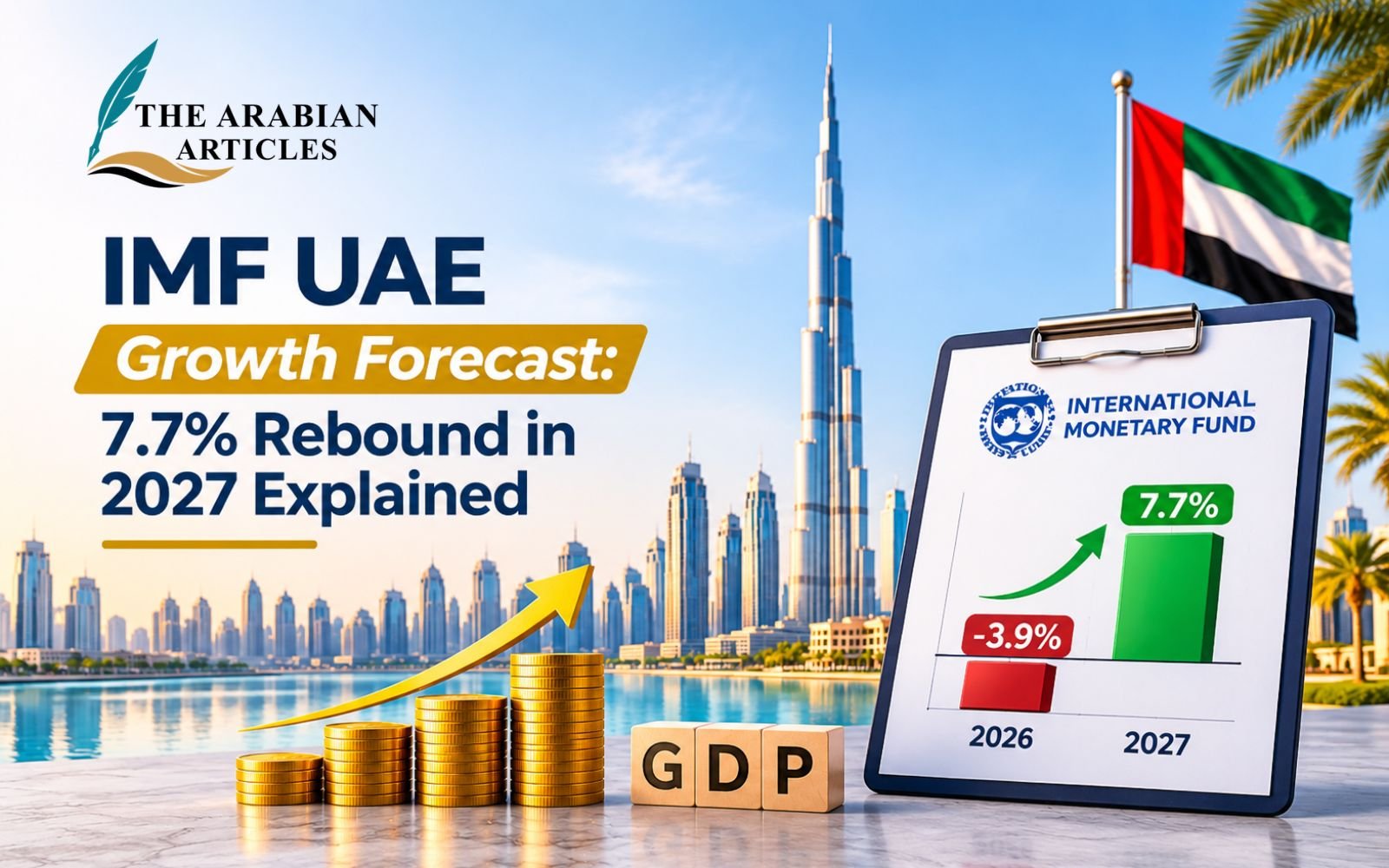

The latest IMF UAE growth forecast has produced a headline that’s easy to repeat: the UAE economy is expected to grow 7.7 per cent in 2027. That figure is real, but it’s only half the story. The same IMF outlook expects the UAE economy to contract by 3.9 per cent in 2026. Reading both numbers together is the only way to understand what the fund is really saying, and what it means for companies planning ahead.
The Numbers at a Glance
| Economy | 2026 forecast | 2027 forecast |
| UAE | -3.9% | +7.7% |
| Saudi Arabia | -3.3% | +7.9% |
| Six GCC economies combined | -4.8% | +9.1% |
These come from the IMF’s October 2026 outlook. The 7.7 per cent figure for the UAE is 2.4 percentage points higher than the fund’s April forecast, according to Arabian Business. It was presented in Dubai by Jihad Azour, who heads the IMF’s Middle East and Central Asia Department, at an event organised with the Dubai International Financial Centre.
Why the 2026 Number Is Negative
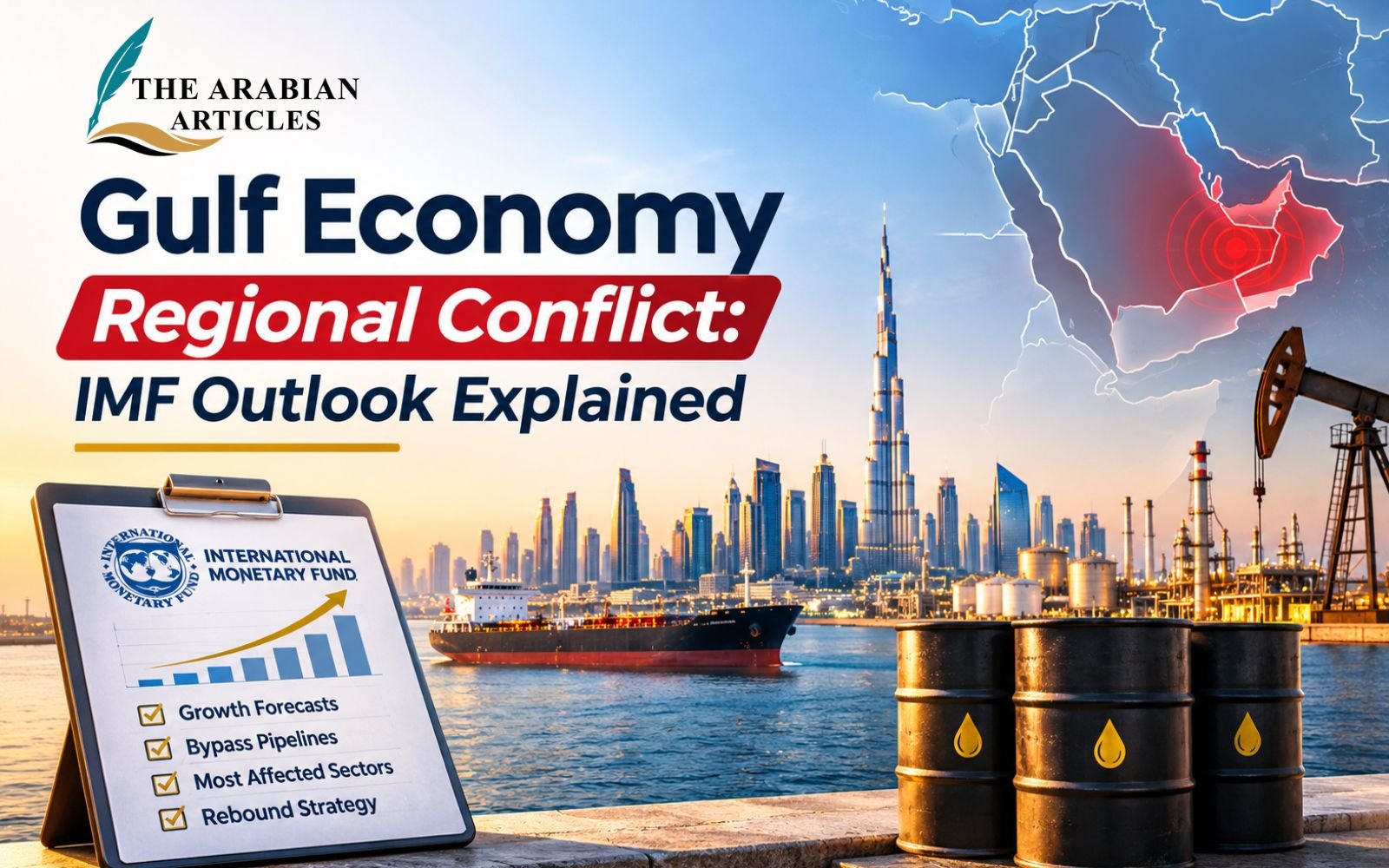
The IMF ties the weak 2026 outlook to the prolonged closure of the Strait of Hormuz and the wider regional war. As The National reports, the fund cut its 2026 forecasts for Gulf economies and pushed back its assumption for when the waterway reopens.
The UAE is less exposed than some neighbours because it has an export route that bypasses the strait. That’s why its contraction is smaller than the double-digit falls forecast for Kuwait and Qatar. Even so, shipping, logistics, tourism and other non-oil activity have all felt the disruption.
Why the 2027 Rebound Looks So Big
Two things explain the size of the jump.
First, the maths. Growth is measured against the previous year. When 2026 is a weak base, a recovery in 2027 shows up as a bigger percentage. A 7.7 per cent rise doesn’t mean the economy will be 7.7 per cent bigger than it was before the disruption.
Second, a specific assumption. The IMF expects Hormuz to start reopening in March 2027, with conditions returning to roughly pre-war levels by October 2027. If that timeline slips, the forecast will likely move with it.
What the IMF Says Is Working in the UAE’s Favour
The fund pointed to several strengths: substantial financial buffers, advanced infrastructure and strong technological capabilities. The buffers matter because they give the government room to support the economy when needed, while keeping a credible medium-term plan for fiscal sustainability.
The report also stressed infrastructure development, supply-chain efficiency and business continuity as priorities for building resilience.
The AI Factor
One of the more interesting lines in the outlook is about artificial intelligence. The IMF says continued AI investment could add around 0.5 percentage points to the UAE’s annual growth. For comparison, it estimates a medium-term gain of 0.1 to 0.6 points across the wider Middle East and Central Asia region, depending on how ready each country is to adopt the technology.
That makes the UAE one of the economies best placed to benefit. If you want to see how companies are already putting AI to work, read our piece on AI adoption in UAE businesses.
Risks the IMF Is Watching
The fund is clear that the outlook can change. Globally, it flags further escalation in conflicts, a reassessment of expectations around AI, renewed trade tensions and fiscal vulnerabilities as things that could weaken growth. For the UAE specifically, the forecast depends heavily on shipping routes returning to normal.
What This Means for Businesses
- Plan in scenarios. Build one plan around a March 2027 reopening and another around a delay, so you aren’t caught out if timelines move.
- Protect cash through 2026. The contraction is real, so keep buffers and review supplier and payment terms.
- Diversify logistics. Companies relying on a single shipping corridor are more exposed. Our report on the Red Sea shipping crisis and Gulf trade explains where routes are under pressure.
- Invest in productivity. If AI can lift growth across the economy, firms that adopt it early may recover faster.
- Look beyond the Gulf. Trade with partners like China and India continues to grow, as we showed in our analysis of the BRICS and UAE trade impact.
For a regional view of how neighbouring economies compare, see our explainer on how the Gulf economy is coping with regional conflict.
The takeaway is straightforward: a hard 2026, a strong projected recovery in 2027, and a forecast that depends on events outside any one company’s control.
Have a story tip, press release, or want to contribute to The Arabian Articles? Get in touch with our team.