


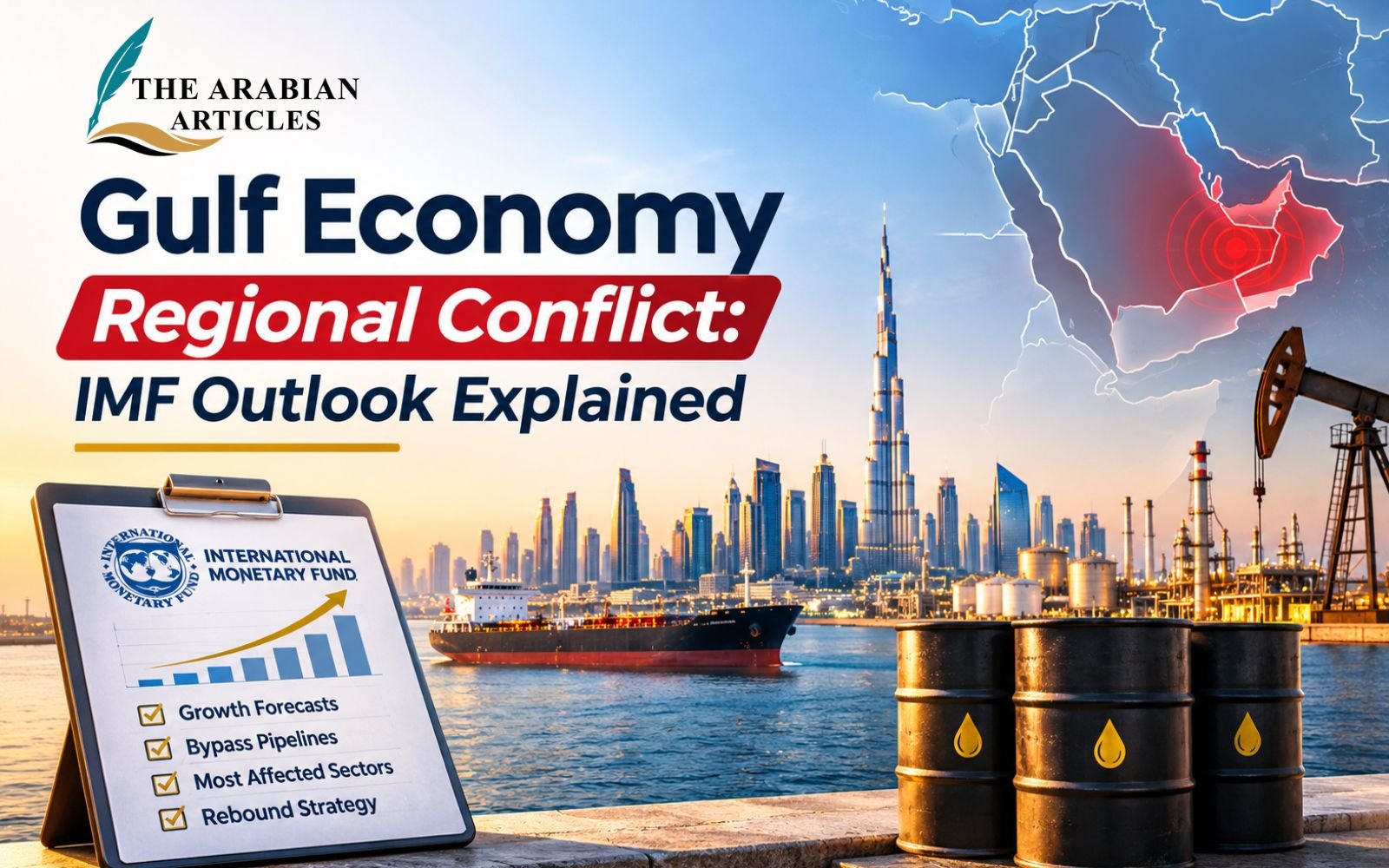

If you’re trying to understand how the Gulf economy regional conflict picture is playing out, the IMF’s October 2026 outlook is the best place to start. It projects the six Gulf Cooperation Council economies will shrink by 4.8 per cent this year before rebounding by 9.1 per cent in 2027. Behind that headline sits a very uneven story, with some countries hit far harder than others. Here’s what the numbers show and how the region is coping.
Why the Strait of Hormuz Matters So Much
Before the war, roughly 20 million barrels of oil a day passed through the Strait of Hormuz. That’s about a fifth of the world’s supply, and a large share of the region’s exports and food imports travel the same route. When the waterway closed in the early stages of the conflict, Gulf producers lost their main route to market.
Production has recovered to some extent since. The IMF notes that output improved in September, and more oil has been getting out as shipments move through the strait. But the closure has lasted longer than the fund first assumed, which is why it has lowered its forecasts.
Who Is Hit Hardest
The damage isn’t spread evenly. Countries with almost total reliance on Hormuz face the deepest contractions in 2026, according to figures reported by Arabian Business:
| Economy | 2026 forecast |
| Kuwait | -16.7% |
| Qatar | about -15.6% |
| Bahrain | -11.3% |
| Saudi Arabia | -3.3% |
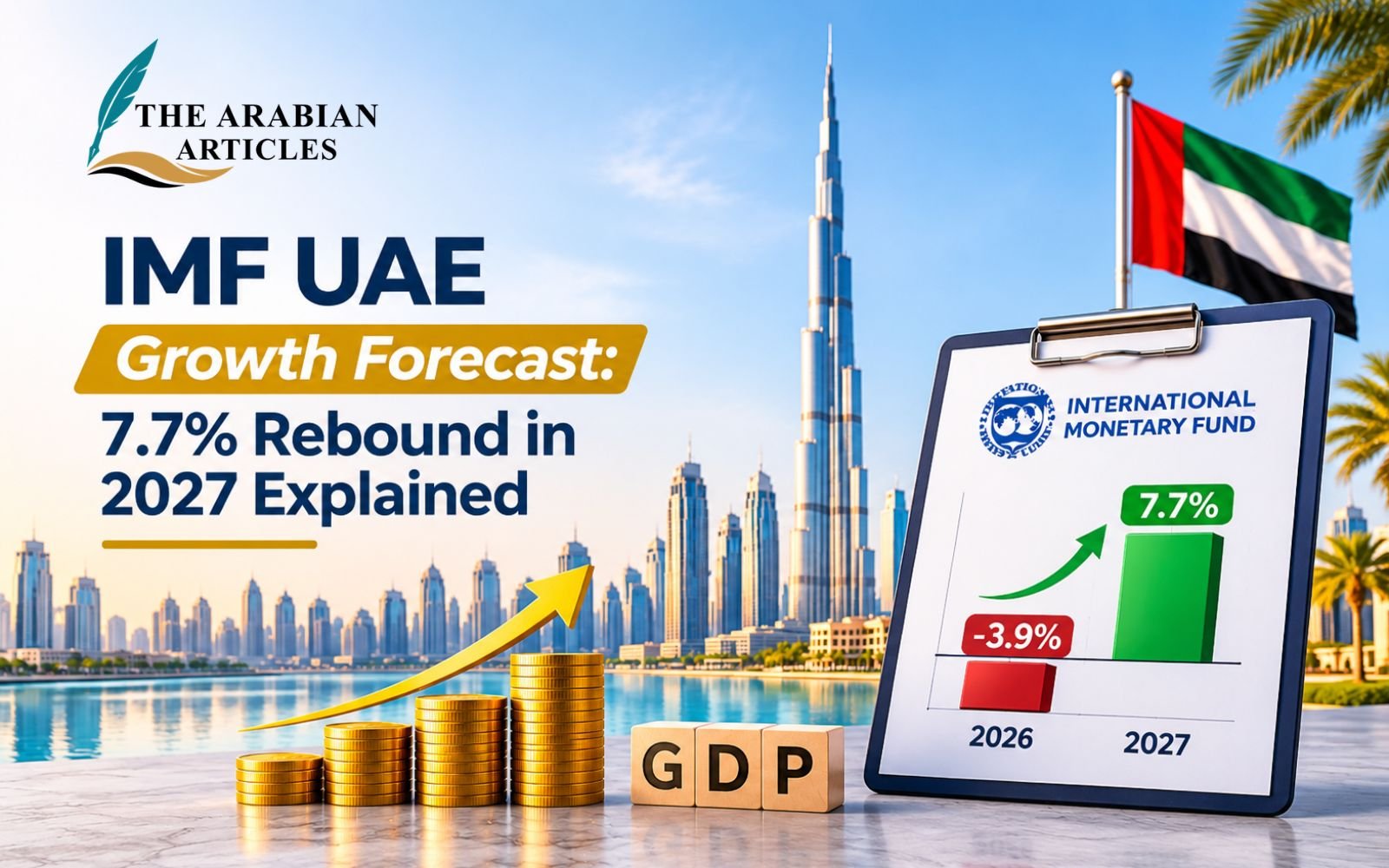
| UAE | -3.9% |
The IMF describes Bahrain, Iraq, Kuwait and Qatar as the commodity producers most affected by disruptions to energy output and transport. It expects double-digit contractions this year, followed by double-digit rebounds in 2027 once production, exports and logistics return to normal.
Why Saudi Arabia and the UAE Are Holding Up Better
Saudi Arabia and the UAE both have pipelines that bypass the strait. Saudi Arabia can send crude west through its East-West pipeline to the Red Sea coast, while the UAE can route exports through its pipeline to Fujairah. That’s why their forecast contractions are far smaller than those of their neighbours.
The IMF’s own wording is that Saudi Arabia is somewhat less affected as an economy with more diversified export routes.
There’s a catch. Saudi Arabia’s Red Sea route faces its own risks from regional attacks, which we covered in our report on the Red Sea shipping crisis and Gulf trade. The pipeline workaround only helps if the route stays open.
It’s Not Just About Oil
One of the clearer lessons from the IMF’s analysis is that the damage reaches well beyond oil and gas. The fund says the contraction reflects longer disruptions in energy production and refining, but also in non-oil activity such as logistics, transport and tourism.
An IMF official also warned that even if oil output is stronger in 2027, continued hostilities would drag on growth in the non-oil sector. That matters for the Gulf states that have spent years building diversified economies, because those are the sectors now under pressure.
What Is Helping the Region Cope
- Bypass routes. Pipelines to the Red Sea and Gulf of Oman coasts keep some exports moving.
- Financial buffers. Years of surpluses give governments room to support their economies. The IMF specifically highlights the UAE’s buffers.
- Diversification. Economies with larger non-oil sectors have more to fall back on, though those sectors are also exposed to disruption.
- A recovering supply picture. Production and shipments have improved in recent weeks, which supports the fund’s expectation of a rebound.
The Timeline Everything Depends On
The IMF’s forecasts rest on one key assumption: that Hormuz begins reopening in March 2027, with conditions returning to roughly pre-war levels by October 2027. If that happens, the big rebounds in the 2027 numbers look achievable. If it doesn’t, expect the figures to be revised again.
For a closer look at one country’s numbers, see our breakdown of the IMF UAE growth forecast.
What Businesses Can Do Now
- Build scenarios around the reopening date. Prepare for both an on-time recovery and a delay.
- Review your shipping options. Single-route supply chains carry the most risk right now.
- Keep a cash cushion. Non-oil sectors are still under strain, so don’t assume demand snaps back overnight.
- Watch policy changes. Gulf governments are still pushing reforms to attract investment, such as Saudi Arabia’s new foreign ownership rules, which could create openings as conditions improve.
The Bottom Line
The Gulf economy is under real strain in 2026, and the pain is concentrated in the countries most dependent on a single shipping lane. The IMF still expects a strong recovery next year, but that outlook depends on events no single company controls. The sensible approach is to plan for both outcomes.
Have a story tip, press release, or want to contribute to The Arabian Articles? Get in touch with our team.