



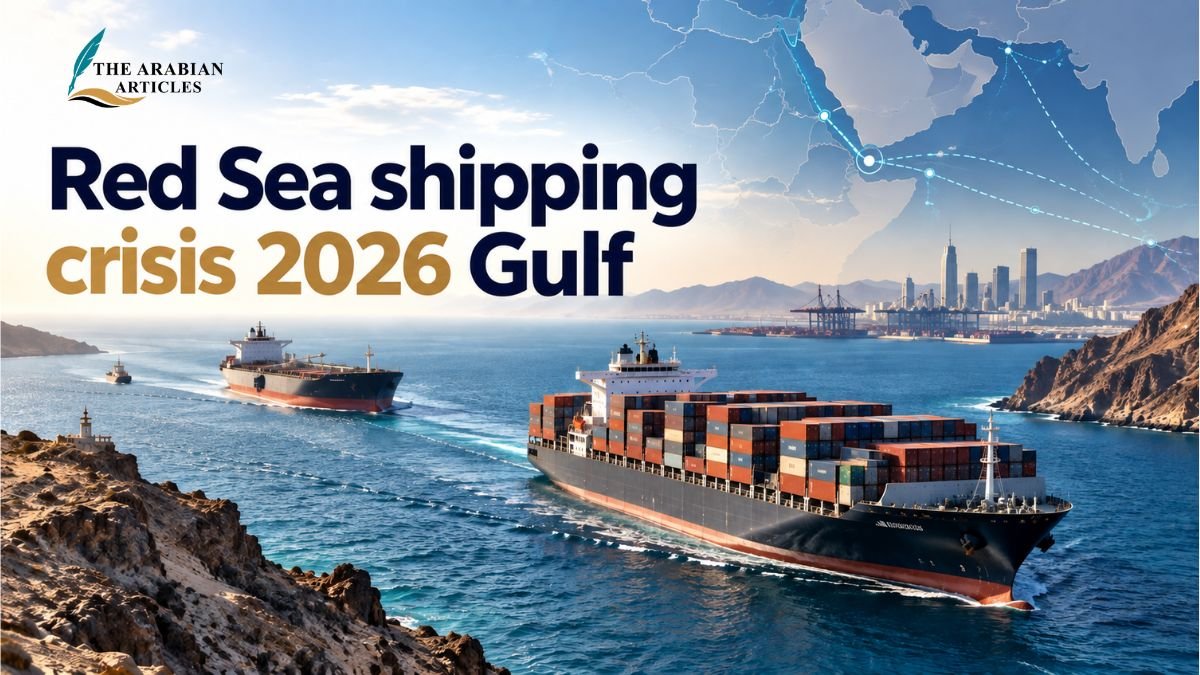

The Red Sea shipping crisis 2026 Gulf trade story has stopped being a background risk and turned into one of the defining economic problems of the year. What began in late 2023 as scattered Houthi attacks forcing container ships to reroute has, by September 2026, escalated into something far more serious: a declared blockade, territorial seizures along Yemen’s coastline, and oil prices pushing past $100 a barrel.
From Disruption to Full-Blown Crisis
For most of 2024 and 2025, the story was manageable in a grim, familiar way. Houthi forces in Yemen targeted commercial vessels transiting the Bab al-Mandab Strait, and shipping companies responded by rerouting around Africa’s Cape of Good Hope instead of the Suez Canal — adding 10 to 14 days to typical Asia-to-Europe voyages and pushing freight rates and insurance premiums sharply higher.
That changed this year. Fighting between the Houthis and Saudi-backed forces reignited in July 2026 after roughly four years of relative calm, and the Houthis declared a naval blockade against Saudi Arabia on July 20. What followed was a rapid territorial push: Houthi fighters seized the port city of Mokha, moved onto the Hanish Islands in the middle of the Red Sea, and by mid-September had taken control of Yemen’s entire Red Sea coastline, along with Perim Island — giving them effective strategic command of the Bab al-Mandab chokepoint itself.
This is happening against the backdrop of the wider 2026 Iran-US war, which has left the Strait of Hormuz largely closed to commercial shipping since February. With Hormuz effectively shut and Bab al-Mandab now under serious threat, the two chokepoints that historically gave Gulf oil exporters flexibility are both compromised at the same time — a combination regional trade hasn’t faced before.
Why This Hits the Gulf Differently Than Past Disruptions
Earlier phases of the Red Sea crisis mostly hurt Asia-Europe container shipping. This phase is different because it directly threatens Gulf oil exports themselves. Saudi Arabia had already been shifting more crude exports through the Red Sea route as an alternative to Hormuz — and a deadly attack on a merchant vessel off Yemen’s coast in August 2026 underscored just how exposed that workaround now is.
The UAE has felt this too. Fujairah port, one of the world’s largest bunkering and oil storage hubs and a critical bypass for vessels avoiding Hormuz, has faced multiple drone strikes this year that disrupted loading operations — a reminder that even routes built specifically to dodge one chokepoint aren’t immune from the wider conflict.
The Trade and Cost Impact
The numbers tell the story clearly. Asia-to-Europe shipping rates have climbed an estimated 25–40% above pre-crisis levels, with transit times stretching 10 to 14 days longer. Mediterranean-bound routes have been hit even harder, given how directly they depended on the Suez shortcut. Automotive manufacturers running just-in-time supply chains have been especially exposed, since delayed parts shipments ripple straight into production schedules.
On the energy side, the stakes are larger still. Roughly 12–15% of global trade and a meaningful share of the world’s oil and gas supply move through these two corridors combined. With Hormuz already constrained, analysts have warned that a fully disrupted Bab al-Mandab could put close to a quarter of global oil and gas flows at risk.
What This Means for Gulf Businesses
For companies operating in or trading through the Gulf, a few practical realities are emerging:
- Freight and insurance costs aren’t returning to pre-2023 levels anytime soon. Budget for elevated shipping costs as the new normal, not a temporary spike.
- Diversify logistics partners and routes where possible. Businesses relying on a single shipping corridor are more exposed than those with backup options, even at higher cost.
- Watch regional investment sentiment closely. Prolonged instability tends to make investors more cautious, even in markets actively working to attract foreign capital — a dynamic worth tracking alongside reforms like Saudi Arabia’s foreign ownership rules for 2026.
- Expect continued volatility in oil-linked costs. Fuel surcharges and energy-dependent input costs are likely to stay unpredictable while both chokepoints remain contested.
Looking Ahead
Nobody currently has a clear timeline for resolution. The crisis is tightly bound to the broader Iran-US war and the shifting balance of power between the Houthis and the Saudi-backed government, and neither shows signs of resolving quickly. For Gulf businesses, the practical response isn’t waiting for things to calm down — it’s building supply chains and cost models that can absorb ongoing disruption, because that disruption looks like it’s here to stay for a while.
Have a story tip, press release, or want to contribute to The Arabian Articles? Get in touch with our team.