



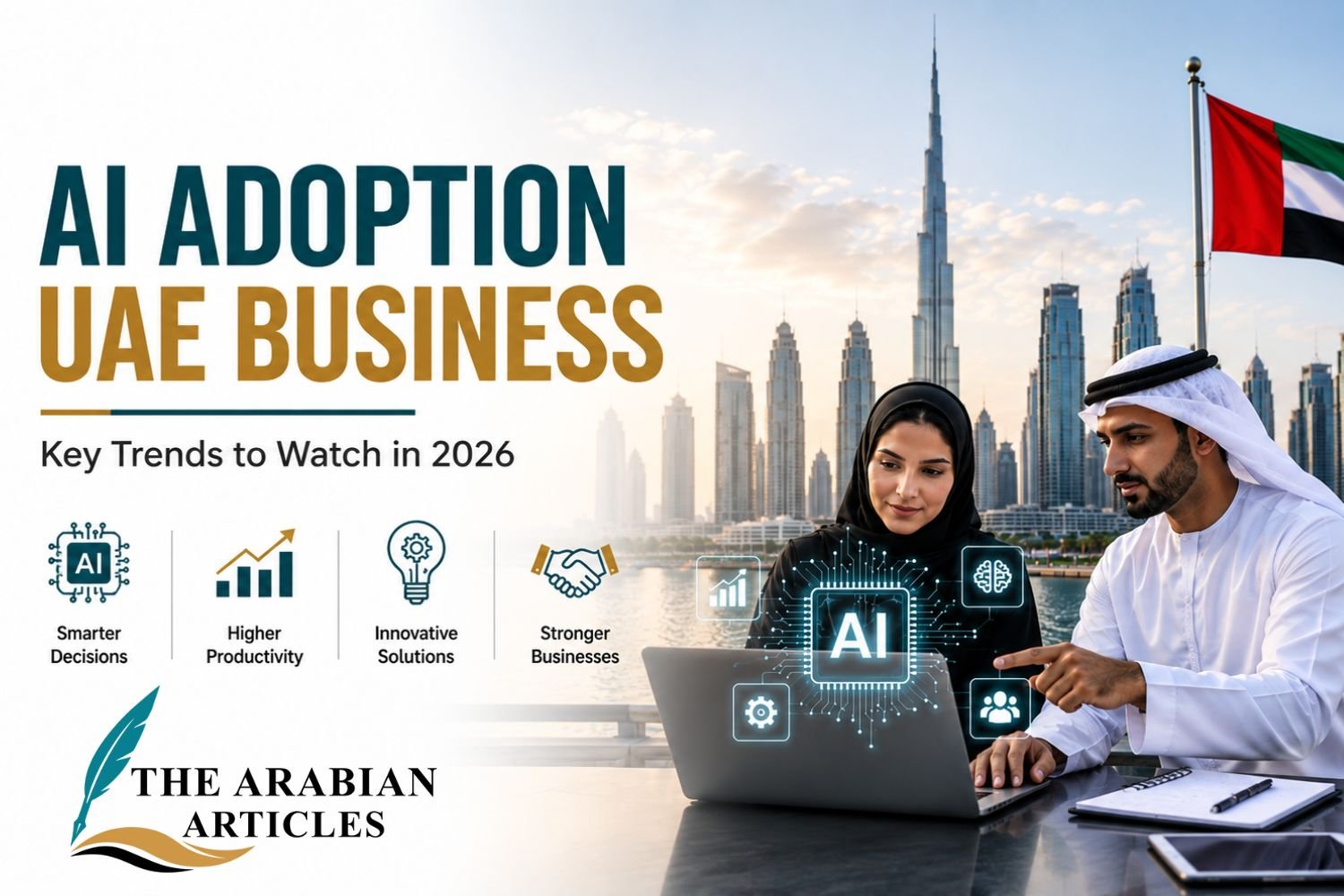

AI adoption UAE business 2026 has moved from experimentation to execution. What started as pilot projects in a handful of tech-forward companies has turned into a nationwide push, with the UAE government and private sector both treating artificial intelligence as core infrastructure rather than an optional upgrade. Here’s what’s actually changing on the ground this year.
Why UAE Businesses Are Racing Toward AI
The UAE has positioned itself as a regional AI hub, backed by government strategy and heavy investment. The UAE Strategy for Artificial Intelligence, launched by the government, set an early tone: AI isn’t just for tech companies — it’s meant to touch every sector, from logistics to healthcare to retail.
That top-down push has trickled into the private sector. Banks are automating fraud detection, retailers are using AI for demand forecasting, and logistics companies are optimizing delivery routes in real time. The common thread is efficiency — businesses are under pressure to do more with leaner teams, and AI tools are the fastest way to get there.
Key AI Adoption Trends in UAE Businesses for 2026
1. Generative AI Moves Into Daily Operations
Beyond chatbots, UAE companies are now using generative AI for drafting contracts, summarizing reports, and even generating marketing content. What was a novelty in 2023–2024 is now a standard part of many workflows.
2. AI-Powered Customer Service Becomes the Norm
Retail and hospitality businesses — two sectors central to the UAE economy — are deploying AI-driven customer service tools that handle bookings, complaints, and FAQs in multiple languages, reducing response times significantly.
3. SMEs Are Catching Up to Large Enterprises
Previously, AI adoption was mostly a large-enterprise story. That’s shifting. Cloud-based AI tools have lowered the entry cost, letting small and medium businesses in Dubai and Abu Dhabi adopt tools for accounting, inventory management, and customer insights without needing an in-house data science team.
4. Regulatory Clarity Is Catching Up
As adoption accelerates, so does scrutiny. UAE regulators have been working on clearer data protection and AI governance frameworks, pushing businesses to think about compliance alongside innovation — particularly around data privacy and algorithmic accountability.
5. Talent Gap Remains the Biggest Bottleneck
Despite the enthusiasm, many UAE businesses report a shortage of skilled AI talent. This is fueling demand for training programs and partnerships with universities, as well as increased reliance on third-party AI vendors who can plug the skills gap.
What This Means for UAE Business Owners
If you’re running a business in the UAE, the practical takeaway is this: AI adoption is no longer a “nice to have” competitive edge — it’s becoming baseline expectation, especially in retail, finance, logistics, and hospitality. Businesses that delay risk falling behind competitors who are already using AI to cut costs and improve customer experience.
For business owners exploring this shift, it’s worth pairing any AI adoption strategy with a clear look at broader business setup and operating costs, since new tools often mean new line items in the budget — software subscriptions, staff training, and sometimes new hires with specialized skills.
The Road Ahead
The UAE’s ambition is clear: become a global leader in applied AI, not just AI research. For businesses, that means the pressure to adopt won’t be easing anytime soon. The companies that treat 2026 as the year they seriously integrate AI — rather than experiment with it on the side — will likely be the ones setting the pace in their industries over the next few years.
Have a story tip, press release, or want to contribute to The Arabian Articles? Get in touch with our team.