



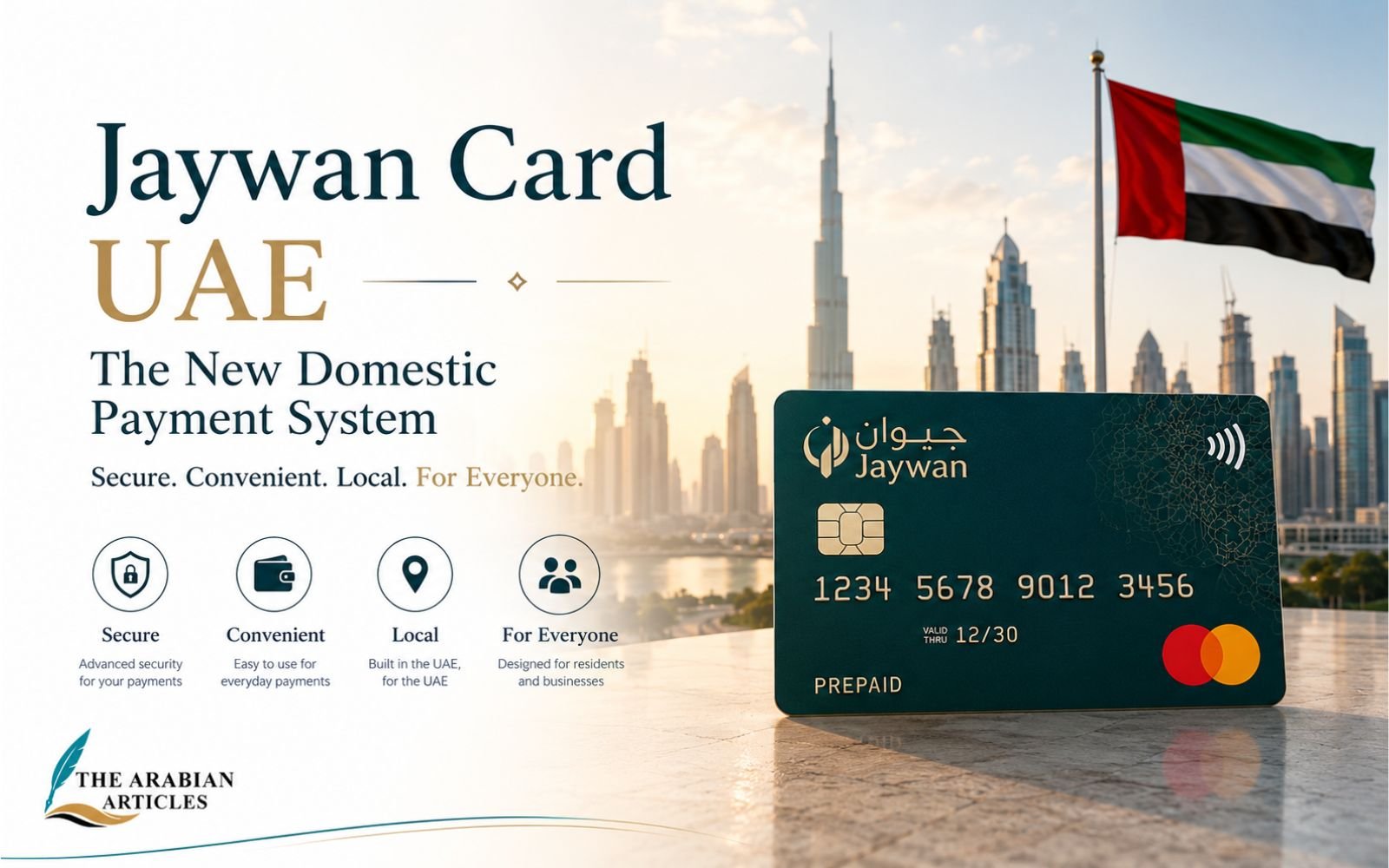

The United Arab Emirates has been steadily building its own financial infrastructure to reduce dependence on international payment networks — and the Jaywan card is one of the clearest signs of that shift. If you’re a UAE resident, business owner, or simply someone tracking the region’s fintech growth, here’s what you need to know about this domestic payment scheme and why it matters.
What Is the Jaywan Card?
Jaywan is the UAE’s national payment card scheme, developed to give banks, businesses, and consumers a homegrown alternative to global card networks like Visa and Mastercard. It’s part of a broader push by the Central Bank of the UAE to strengthen the country’s financial independence, cut transaction costs, and keep more payment data processed within national infrastructure.
Much like similar domestic schemes in other countries — such as India’s RuPay or Saudi Arabia’s mada — Jaywan is designed to handle everyday transactions: point-of-sale payments, ATM withdrawals, and increasingly, online purchases.
Why Is the UAE Launching a Domestic Card Scheme?
There are a few clear drivers behind this move:
- Lower transaction costs — Domestic processing typically reduces the fees banks and merchants pay to international networks.
- Financial sovereignty — Keeping payment data and infrastructure within the UAE strengthens national control over financial systems.
- Alignment with regional trends — Neighboring Gulf countries have pursued similar domestic payment strategies, and Jaywan positions the UAE alongside that shift.
- Support for a cashless economy — The scheme fits into the UAE’s larger digital transformation goals across banking and retail.
Jaywan Co-Badged Cards: What’s New
Recently, UAE banks have started introducing Jaywan co-badged credit cards — cards that combine Jaywan’s domestic network with international acceptance through partnerships with established global networks. This means cardholders get the cost benefits of domestic processing for local transactions while still being able to use their card when traveling or shopping internationally.
This co-badging approach is a practical middle ground: it avoids forcing consumers to choose between “local” and “global” and instead blends both.
What This Means for UAE Businesses
For merchants and business owners, Jaywan adoption could mean:
- Potentially lower merchant processing fees over time
- New card terminal or POS system compatibility requirements
- An additional payment option to offer increasingly payment-conscious customers
Businesses in retail, hospitality, and e-commerce should keep an eye on how quickly UAE banks roll out Jaywan-enabled cards to their customer base, since adoption speed will determine how soon this becomes a mainstream expectation at checkout.
What This Means for UAE Residents
For everyday cardholders, the practical impact will likely be gradual. Existing debit and credit cards will continue to work as normal, and Jaywan-enabled cards are expected to roll out through banks over time rather than replace current cards overnight. Residents should watch for communications from their banks about Jaywan card options as they become available.
The Bigger Picture
The Jaywan card is one piece of a larger fintech transformation happening across the UAE and the wider Gulf region — one that also includes growing AI adoption in financial services, new retail payment regulations, and increased foreign investment in digital infrastructure. Together, these developments point toward a UAE financial ecosystem that is faster, more locally controlled, and increasingly competitive on a global scale.
Have a story tip, press release, or want to contribute to The Arabian Articles? Get in touch with our team.