


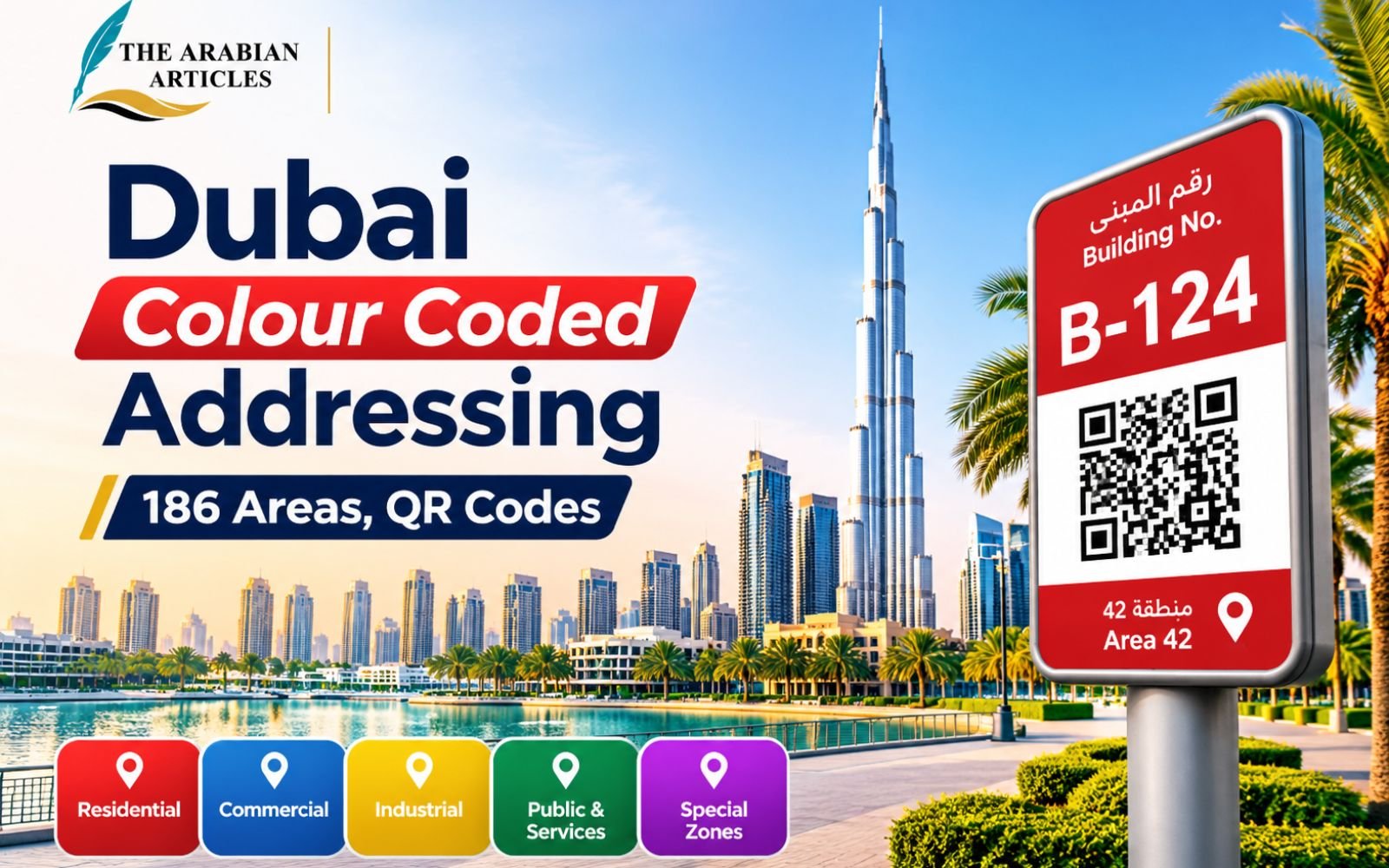

The rollout of Dubai colour coded addressing is one of those changes you’ll notice without even trying. Street signs, neighbourhood boards and house number plates across the emirate are getting a new look, with colour-coded designs, Makani numbers and QR codes. Authorities announced the programme on 7 October 2026, and it will reach 186 areas by 2030. Here’s what’s changing, where it starts, and what it means for you.
What Is Changing
The new visual identity was launched by the Supreme Committee for Urban Planning, working with the Roads and Transport Authority (RTA) and Dubai Municipality. It covers three things: sector and area identification signs, internal street name signs, and house number plates.
The goal is simple. All three should look like they belong to the same system, so a visitor can tell where they are at a glance and a delivery driver can find the right door faster.
What the Five Colours Mean
The system uses five colours, each chosen to reflect the character and geography of a different part of Dubai. Blue marks areas near the sea, and gold marks desert areas. The remaining colours follow the same logic for other types of neighbourhood.
The idea is to give each area its own visual signature without breaking the shared format for street names and property numbers. A resident should be able to tell one neighbourhood from the next, but a first-time visitor shouldn’t have to relearn how to read an address.
Where It Starts and How Long It Will Take
The full plan covers 186 areas across 19 sectors. It rolls out in phases, beginning in the fourth quarter of 2026 and continuing through 2030.
The first phase covers five neighbourhoods: Za’abeel 1, Za’abeel 2, Nad Al Sheba, Al Khawaneej 1 and Nazwa. More than 2,000 signs will be installed or replaced there this year, according to Gulf Business.
RTA and Dubai Municipality set the order of priority using factors like population density, urban expansion, and how important each area is to the city’s transport and development network. If your neighbourhood isn’t in the first group, it hasn’t been left out. It simply comes later in the schedule.
Makani Numbers and QR Codes
The new house plates will show each property’s Makani number next to a QR code. Makani is Dubai’s existing location system, which gives buildings and entrances unique numerical references.
Scanning the QR code is expected to bring up details about the area, the meaning behind street names, and nearby attractions. That should make the plates useful to tourists as well as residents. The plate colours will match the colours on the new street and area signs, so everything lines up.
What Isn’t Changing
This programme is about neighbourhood and property addressing, not the big highway signs. As Gulf News notes in its explainer on the new signs, the announcement doesn’t replace Dubai’s existing colour-coded highway navigation system. The signs you rely on for main roads stay as they are.
What It Means for Residents
The announcements reviewed so far don’t ask residents to do anything. A few habits are still worth building:
- Know your Makani number and keep it saved on your phone. It’s already useful for deliveries and emergency services.
- Keep your address details consistent across delivery apps, utility accounts and online shopping profiles, so a sign change doesn’t create confusion later.
- Watch for official updates from RTA and Dubai Municipality to find out when your area’s turn comes.
What It Means for Businesses
Clear, standardised addresses help anyone whose business depends on being found. Delivery companies, ride-hailing drivers, e-commerce stores and real estate agents all stand to save time when signs and plates are easy to read and tied to a Makani number.
If customers visit your premises, add your Makani number to your website, Google listing and invoices. If you’re still choosing where to base your company, factor the area into your plans, since office and licensing costs vary a lot by location. Our breakdown of UAE business setup costs for 2026 is a good place to start.
What Comes Next
The signs and plates are only the first stage. Later phases are set to extend the same identity to bus stops, smart applications and area map boards. That fits a wider pattern of Dubai pulling more everyday services into connected, digital formats, a trend we covered in our look at AI adoption in UAE businesses.
For now, the practical advice is simple. Learn your Makani number, expect new signs to appear gradually, and keep an eye out for your own area’s date.
Have a story tip, press release, or want to contribute to The Arabian Articles? Get in touch with our team.