


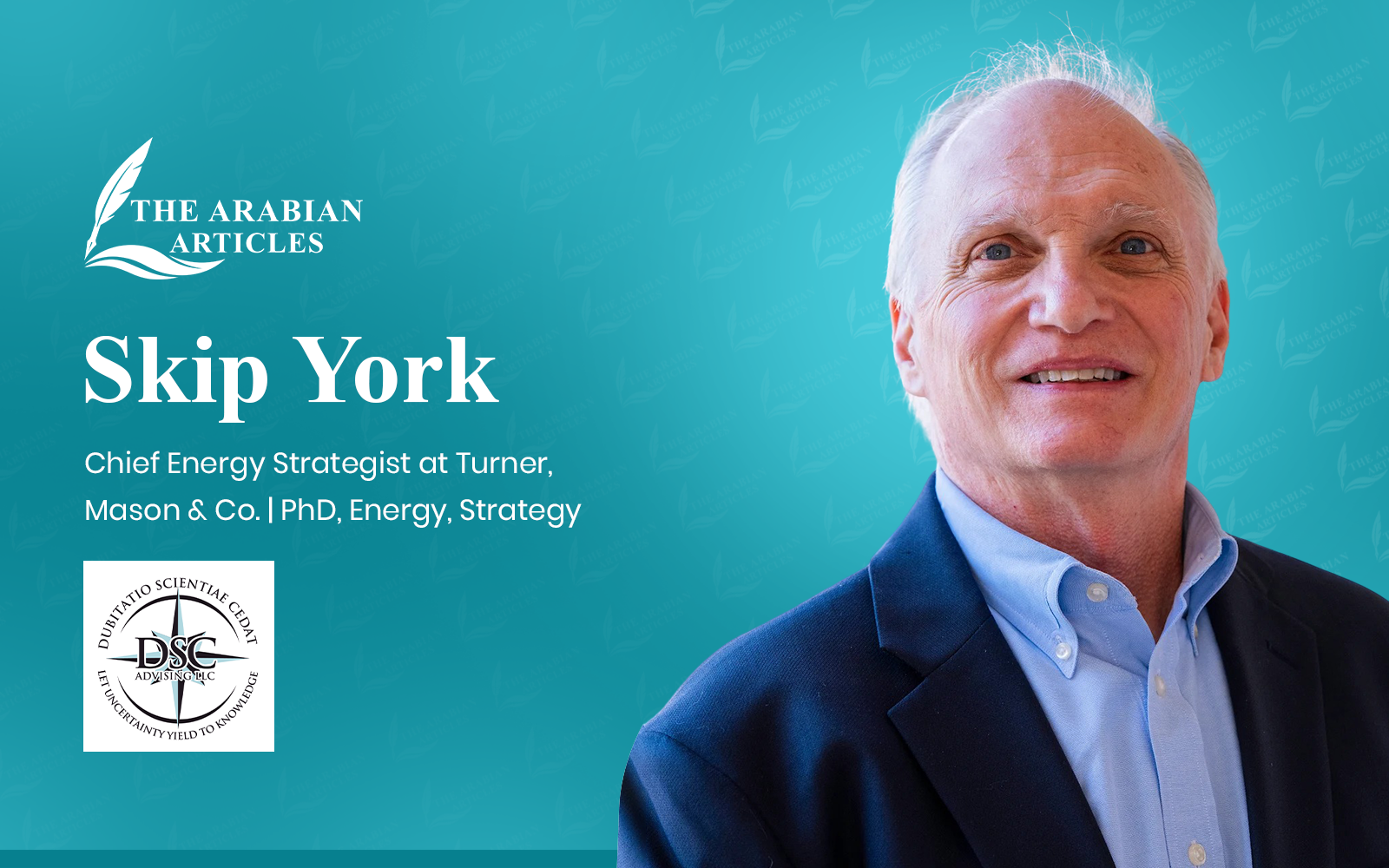

Skip York is a strategist who believes that clear and disciplined thinking can change the future of an organization. With a strong academic base and global work experience, he helps leaders move through uncertainty with confidence. Skip has experience with large corporations and leading consulting companies. In the process, he got to know how to make complicated concepts sound simple. Today, through DSC Advising, LLC, he focuses on one core belief. Also, the strategy should not be confusing or locked in a document. It should be lived every day across the entire organization. In this interview, Skip tells his story, lessons, and opinions about leadership, purpose, and disciplined decision-making.
Background, Education, and Inspiration
Skip York has always been interested in the way the world works. This interest made him pursue a PhD in Economics at the University of Virginia. He was trained in his studies on how to understand complex systems and real-world problems. Then he worked with large corporations such as ExxonMobil and BHP. He also worked in the leading consulting firms like McKinsey and Company and Charles River Associates. These were positions that made him sharp in his thoughts and communication. Skip learned how to explain difficult ideas clearly. Over time, he felt drawn to strategy work. He wanted to help leaders use strategy as a true advantage. That desire inspired him to start DSC Advising.
About DSC Advising, LLC
DSC Advising is built around one simple idea. Use knowledge to overcome uncertainty. Skip helps clients answer five key questions: What is their true purpose? Where should they compete? How will they win? What skills do they need to succeed? How do they measure success? Until these answers are clear, there is no real strategy. The process is not easy, but not to be feared. Clients must challenge old beliefs. Skip often asks what must be true for an idea to work or fail. Over time, opinions turn into insight. What makes DSC unique is that clients own the process. And in the end, the client team not only owns the strategy, but they also believe in it deeply.
Key Lessons as a Leader
Skip has learned many lessons, but three stand out. First, a good strategy takes effort, but it should never feel scary or secret. The best strategies are open and shared. Second, execution matters more than ideas alone. A great strategy means nothing if people cannot act on it. Without direction, teams only move from task to task. Third, alignment is critical. Each individual has to pull in the same direction. Work is meaningful when teams comprehend the purpose. So, these lessons shape Skip’s leadership style. He focuses on clarity, action, and shared goals. That is how long-term value is created.
Strategy as a Living Practice
Skip’s belief that strategy must be lived, not stored, also shapes his upcoming book, Mind the Gap: How Leaders Bridge Today’s Position to Tomorrow’s Aspirations, to be published this September. The book reflects how he approaches strategy in practice. It focuses on helping leaders move from where they are today to where they want to be, using clear thinking, disciplined choices, and shared commitment. The ideas in the book mirror the work he does daily with leadership teams.
Impact on Organizations and People
Skip believes strategy should be a living guide, not a shelf document. Through his work, organizations learn to use strategy in daily decisions. Teams begin to set better priorities. Leaders gain confidence in choosing what matters most. Over time, strategy becomes part of the culture. People stop guessing and start aligning. This shift also creates stronger organizations. Skip takes pride in showing clients that strategy is practical. It helps people decide faster and work smarter. By making strategy usable, he helps organizations grow with purpose. The effects of his influence can be observed in the rationality, concentration, and positive long-term results.
Long-Term Goals and Vision
Skip hopes to be remembered as a champion of effective strategy. He desires to be regarded as a trusted companion who contributes to organizations achieving their maximum potential. He has a vision of influencing how organizations improve decision-making by means of clear thinking and discipline. He focuses on global portfolio choices and new business models. These tools help leaders face change with confidence. To reach these goals, Skip stays hands-on. He shows up every day and works closely with clients. Also, he believes in shared success. By investing fully in each engagement, he builds trust. That trust is the foundation of lasting impact.
Advice for Aspiring Leaders
Skip encourages leaders to follow their passion sooner rather than later. For years, he hesitated to start his own firm. Fear held him back. His biggest worry was simple. What if no one called? A conversation with his wife changed his thinking by reminding him there are other goals to achieve if this didn’t work. That moment gave him courage. Today, DSC Advising grows through referrals alone. Skip’s advice is clear. Do not wait for perfect timing. Real impact creates its own momentum. Clients who feel they are getting something of value will be your best advocates. Bravery and action are better than comfort and complacency.
Encouraging Future Leaders
Skip believes mentorship is key to leadership growth. Early in his career, a leader at McKinsey gave him freedom to take risks. This leader said that there was no mistake so big that it couldn’t be fixed. That message reduced fear. It helped Skip step closer to the edge and learn faster. Leaders develop when they are motivated. Errors are a part of learning. Skip urges organizations to provide secure environments to grow. People respond when they are trusted, and that’s what makes them willing to take the challenge. Furthermore, leadership should not be focused on punishing failure, but rather learning from it. With guidance and trust, more people will step forward and lead with confidence.
A Quote That Guides Him
One quote guides Skip’s daily choices. “Discipline is the difference between what you want now and what you want most.” This idea shapes how he works and lives. Discipline helps leaders stay focused. It keeps them aligned with long-term goals. Short-term comfort can distract from true purpose. Skip believes discipline turns strategy into action. It helps teams make better trade-offs. This quote is a reminder to him that success is developed with time. Moreover, it is important not to win fast but to have a clear and consistent effort. For Skip, discipline is not a restriction. It is freedom to achieve what truly matters.
Conclusion
Skip York’s journey shows that strategy does not have to be complex or distant. When done well, it becomes a daily guide for action. Through DSC Advising, he helps leaders find clarity in uncertainty. His work blends discipline, curiosity, and purpose. Skip also believes organizations succeed when people understand why they do what they do. His approach empowers teams to own their future. By making strategy human and practical, he creates lasting value. Skip’s story is a reminder that clear thinking, shared purpose, and steady discipline can turn vision into reality.
𝐅𝐢𝐧𝐝𝐢𝐧𝐠 𝐈𝐧𝐬𝐩𝐢𝐫𝐚𝐭𝐢𝐨𝐧 𝐰𝐢𝐭𝐡 𝐒𝐤𝐢𝐩 𝐘𝐨𝐫𝐤
𝐑𝐞𝐚𝐝 𝐌𝐨𝐫𝐞 ➤
𝐃𝐞𝐯𝐞𝐥𝐨𝐩𝐢𝐧𝐠 𝐓𝐫𝐮𝐬𝐭 𝐝𝐮𝐫𝐢𝐧𝐠 𝐔𝐧𝐜𝐞𝐫𝐭𝐚𝐢𝐧𝐭𝐲: 𝐀𝐧 𝐈𝐧𝐭𝐞𝐫𝐯𝐢𝐞𝐰 𝐰𝐢𝐭𝐡 𝐃𝐫. 𝐇𝐚𝐬𝐬𝐚𝐧 𝐀𝐛𝐝𝐮𝐥𝐥𝐚 𝐀𝐥-𝐌𝐚𝐧𝐧𝐚𝐢