


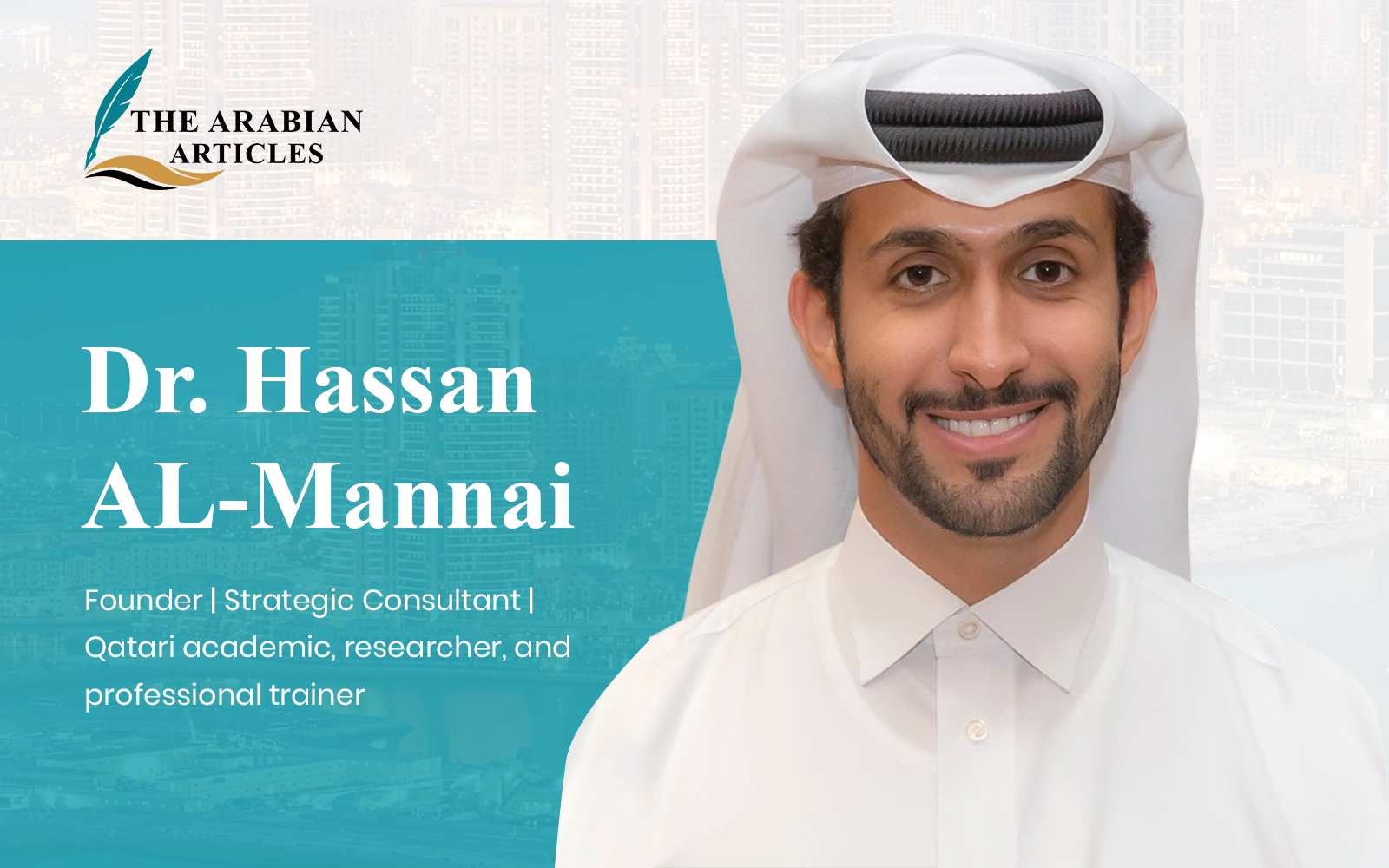

Dr. Hassan Abdulla Al-Mannai is a Qatari scholar, researcher, and professional educator. His work can be described as at the crossroads of services marketing, customer relationship management, and crisis resilience. He is a PhD holder in management and marketing at the University of Hull in the United Kingdom. His research is grounded in Qatar’s real business environment and focuses on how organizations protect trust during disruption. He is also engaged in teaching, professional training, and research. In addition, he will employ applied knowledge and ethical leadership to develop competent leaders and institutions and long-term human development in Qatar.
Tell Us About Yourself and Your Professional Journey
My professional experience has involved both practice and academic research. My motivation is related to a strong interest in human development and organizational resiliency. This interest eventually led me to services marketing and a customer-centered approach. Teaching and research enabled me to learn about organizations in a very intimate manner, whereas training provided me with close interactions with professionals. This mixture also influenced my views on leadership and resiliency. I learned that theory must serve practice to create value. Every phase of my career supported one ideology. Trust, communication, and long-term relations are what the sustainability of success relies on when dealing with uncertainty and times of crisis.
Your Area of Expertise and Current Focus – Dr. Hassan Abdulla Al-Mannai
My expertise lies in services marketing and customer relationship management, commonly known as CRM. My interest lies in how organizations maintain trust and service quality at times of turbulence. The customers today are very demanding and well-informed. They want it to be clear, quick, and consistent. My writing is based on practical frameworks that can be used instantly by organizations. I learn to use customer-focused decisions to defend the reputation and loyalty. I also concentrate on the quantifiable results and not the abstract. I plan to ensure that organizations change fast and remain on good terms with customers and other stakeholders, even in situations that render their operations unpredictable.
PhD Research and Qatar’s Real-World Context
My PhD research explored services marketing and CRM practices in Qatar during the political blockade. This period created major challenges for service organizations. I examined how they responded to maintain customer confidence and operational stability. The research highlighted strategies such as transparent communication, service continuity, and flexible decision-making. It showed how proactive relationship management reduced uncertainty among customers. The study connected academic theory with real business responses. It similarly showed that companies that emphasized reassurance and flexibility were better placed to maintain performance and trust when faced with extended pressure.
Key Message for Business Leaders – Dr. Hassan Abdulla Al-Mannai
The main message from my research is simple and powerful. Customer trust is a strategic asset. It becomes even more valuable during crisis periods. Those companies that invest in relationships before being disrupted are in a position to cope with uncertainty. Transparency, consistency, and honest communication ensure credibility. Managers must also be free and welcoming to change. Values and systems are put to the test during a crisis. Short-term-oriented people tend to lose long-term loyalty. Also, strategies that are founded on the sense of trust enable organizations to rise stronger, more respected, and in a better position to grow in the future.
Why Customer Relationship Management Matters Today
Customer relationship management is not limited to software or databases. It is a mindset embedded within organizational culture. CRM influences the thinking of the employees about the customers and the decision. Customers nowadays enjoy a personal approach and transparency. A powerful CRM strategy assists businesses in knowing the needs and expectations better. It also supports faster and more accurate responses. In addition, long-term loyalty creates stability and reduces risk. Transactions alone cannot deliver sustainable success. Organizations that treat CRM as a strategic philosophy build stronger reputations, deeper engagement, and lasting competitive advantage in dynamic markets.
Contribution to Qatar’s Human Development
Teaching and training are central to my professional purpose. I instruct at various colleges and provide professional programs to various groups. I am interested in leadership and communication, strategic thinking, customer management, and crisis response. To me, learning experiences are designed to relate theory to real workplace issues. My goal is always to have a practical impact. I would also want learners to apply their knowledge in real life. I also play a role in developing competent professionals who can help Qatar to achieve its development objectives through education and training. In summary, resilient institutions and sustainable national development are based on strong human capital.
Leadership Qualities for Qatar’s Future
The upcoming leaders in Qatar need to come up with a balanced skill set. Long-term direction requires strategic thinking. Effective communication fosters trust and congruence. Resilience enables leaders to act when they are under pressure. Institutional credibility is safeguarded by ethical decision-making. Relevance and legitimacy are guaranteed by customer and stakeholder orientation. Flexibility can enable leaders to address changes quickly. These attributes go hand in hand. Collectively, they facilitate sustainable performance. Such leaders, capable of generating these abilities, can secure stability in the organization while creating innovations. They are also very instrumental in developing a self-assured and future-oriented national workforce.
Common Organizational Challenges During Crises
There is a lot of pressure applied to organizations by crises. The challenges are commonly uncertainty, operational disruption, and reputational risk. Customer confidence often becomes fragile. The timeframes of decision-making are reduced, and its impact becomes bigger. Struggling organizations tend to be slow in communicating or even defensive. In addition, effective organizations are fast and open-minded. They are consistent in service and change strategy. Clear leadership and coordinated action reduce confusion. Control is not the only issue of crisis management. It is about comfort and faith. The organizations that learn this principle find their way through disruption and save long-term relationships.
Personal Motivation and Long-Term Vision
I am personally driven by impact. I want to make a difference in individuals, organizations, and the future of Qatar. My vision in the long run will be to serve better organizations and better leaders. I hope to relate academic research, teaching, and professional practice with each other in significant ways. Relevance and value are guaranteed by this integration. I desire that my work should be in line with national priorities in development. The long-term progress should be based on building resilient systems and structures of ethical leadership. Sustainable development is possible when practice is informed by research and education influences behavior.
Advice for Young Professionals and Emerging Leaders
The main thing I can recommend to young professionals is to make a regular investment in learning. Earn reputation, not ranks. Learn to communicate and be a good leader at an early age. Get feedback and also be willing to make improvements. Above all things, keep purpose in mind. The meaning of success lies in giving to people and society. Short-term gains are a short-lived lot without sense. Consequently, integrity and commitment are needed for long-term value. When practitioners match personal development to social service, they develop careers that are successful and satisfying. Effective leadership through purpose makes a long-term impression beyond the success of an individual.
Conclusion
Altogether, Dr. Hassan Abdulla Al-Mannai is an intelligent combination of research, practice, and leadership formation. Trust, communication, and resilience are very important in contemporary organizations, as brought out in his work. His emphasis on customer-centric strategy and crisis preparedness could be very helpful to uncertain leaders. His dedication to teaching and training enhances the human resources and institutional capacity of Qatar. By conducting meaningful research and practical interactions, he is still defining future-ready leadership. There is also a definite belief in his journey. Success is sustainable based on people, values, and long-term relationships.
𝐅𝐢𝐧𝐝𝐢𝐧𝐠 𝐈𝐧𝐬𝐩𝐢𝐫𝐚𝐭𝐢𝐨𝐧 𝐰𝐢𝐭𝐡 𝐃𝐫. 𝐇𝐚𝐬𝐬𝐚𝐧 𝐀𝐋-𝐌𝐚𝐧𝐧𝐚𝐢
𝐑𝐞𝐚𝐝 𝐌𝐨𝐫𝐞 ➤